Weird-Matri-Nomics

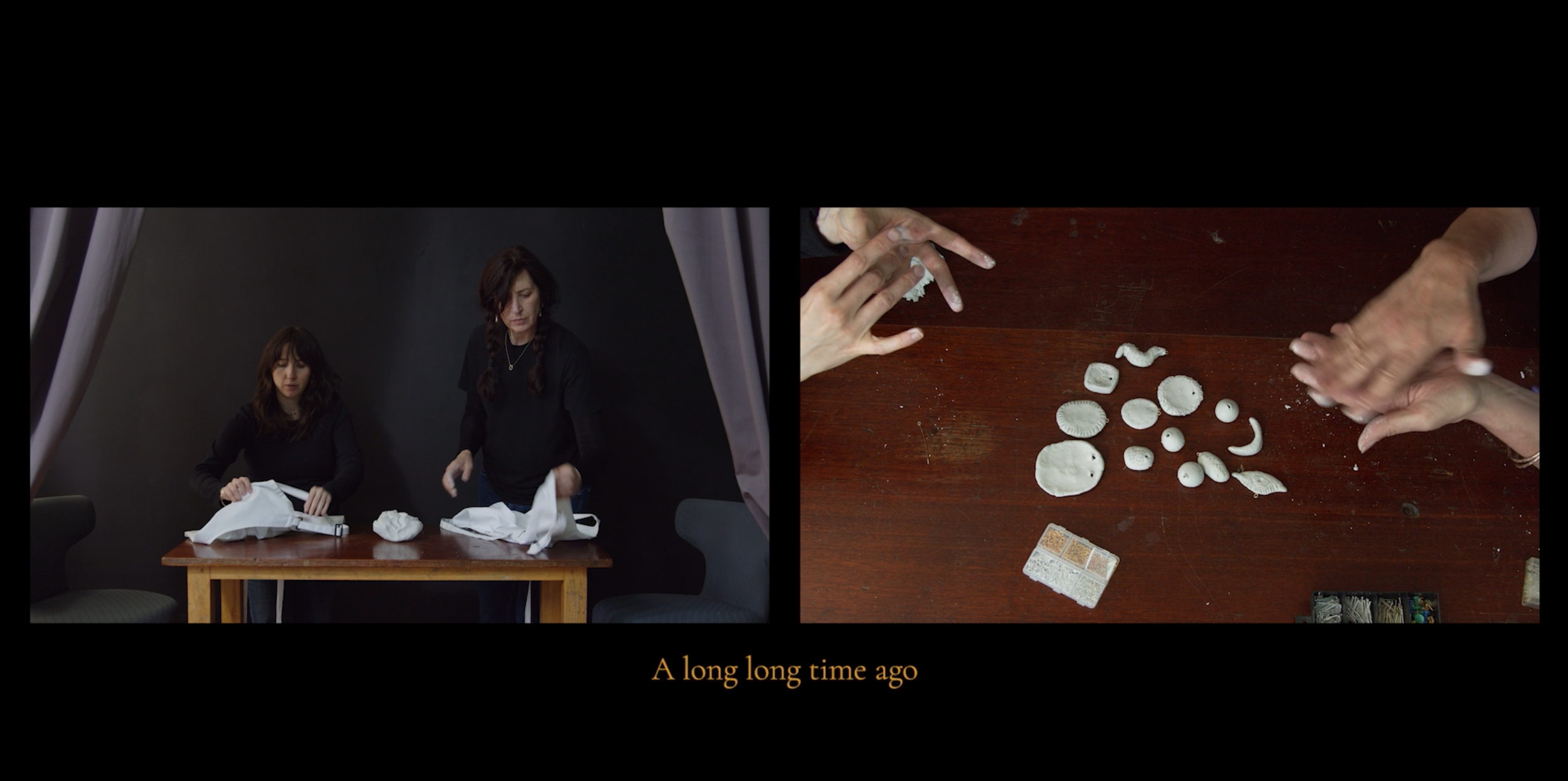
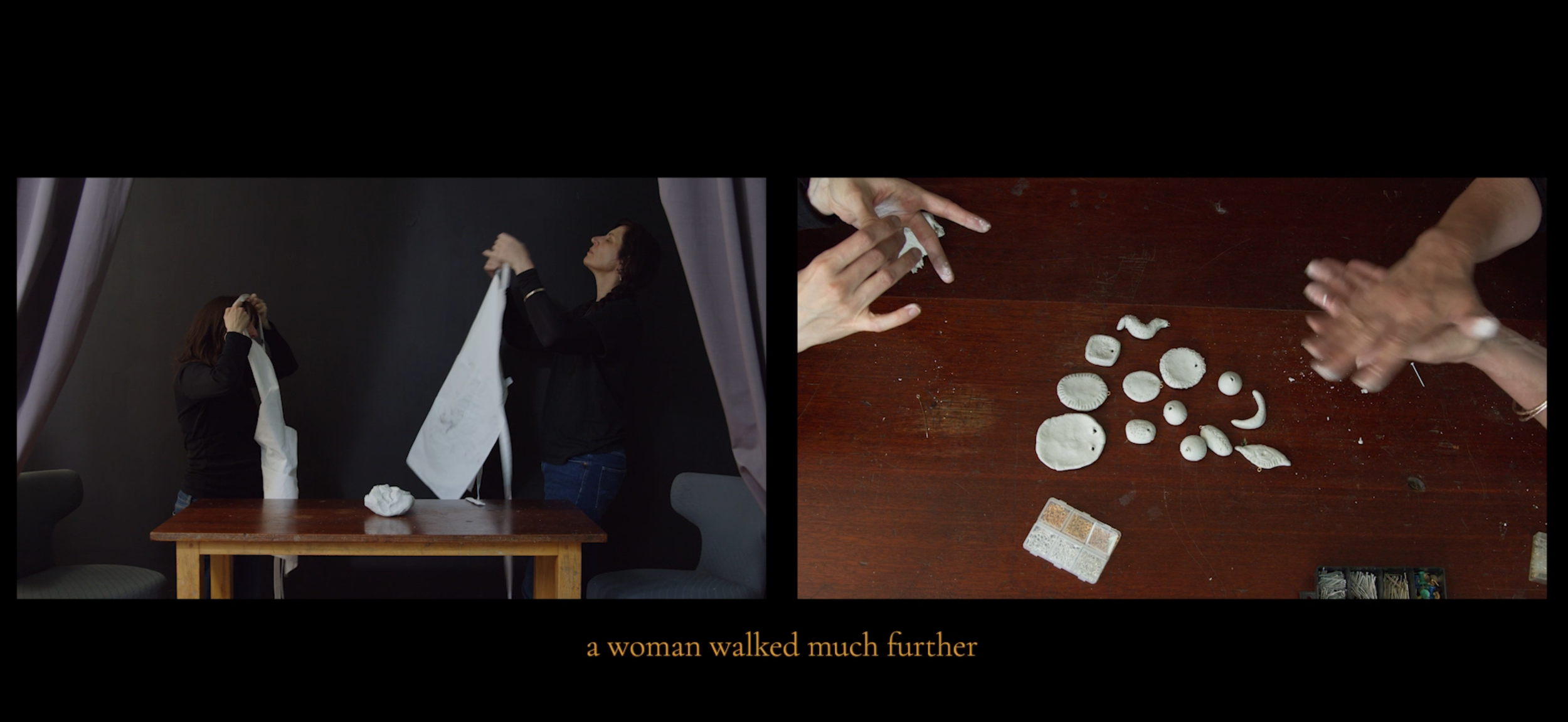
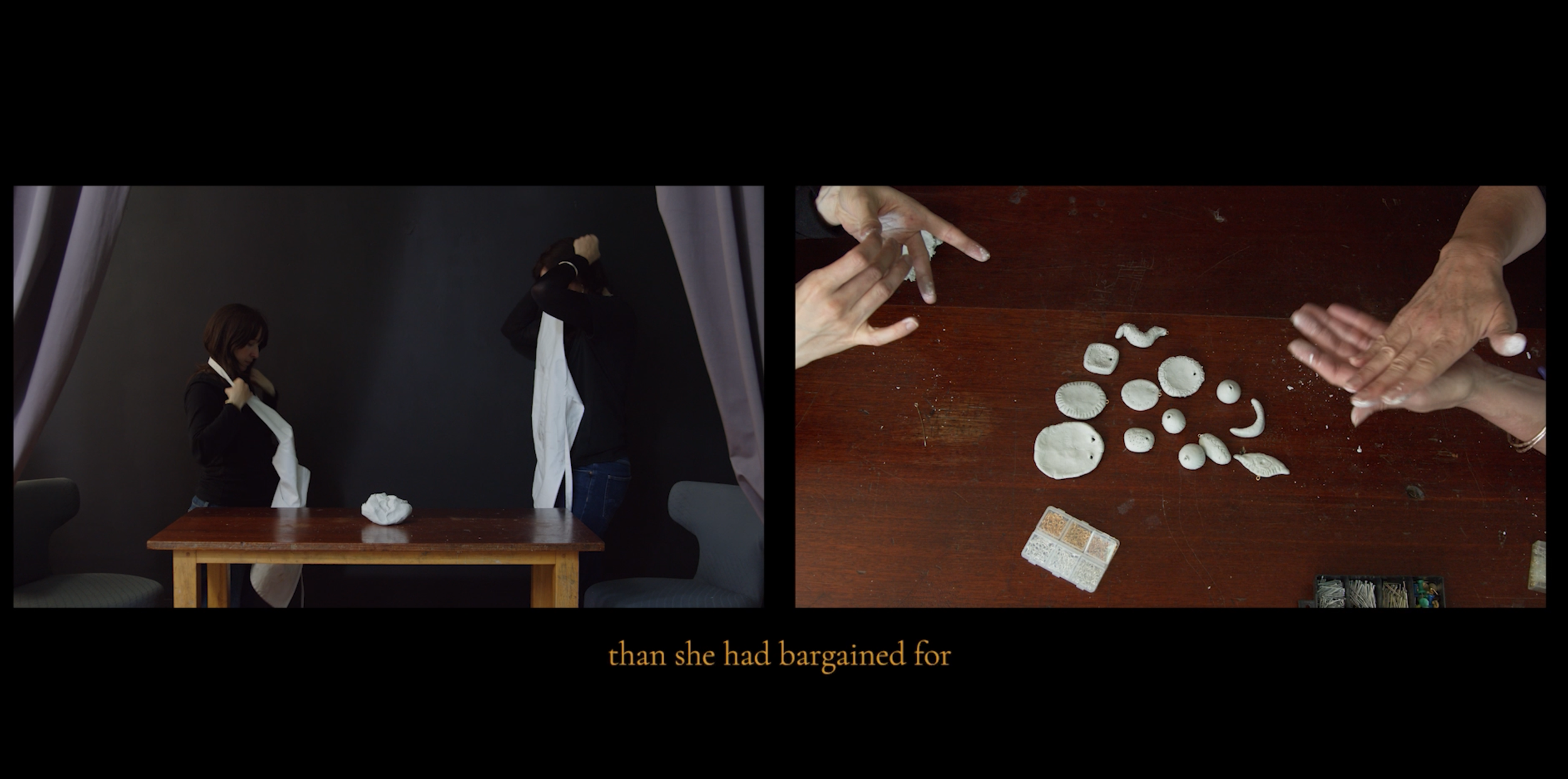
Weird-Matri-Nomics draws on conversations with fellow artist Clémence Hémard-Hermitant ahead of the birth of Clémence’s second child. Transcribing their conversations, reading between the lines, the film creates a space for latent intuition and pregnant imagination to surface and be acknowledged.

The work is shaped by my experience as a birth doula, through which I witness not only women’s physical transformation but the body’s invitation to explore what is emerging within the psyche. Pregnancy makes visible a condition that belongs to all human life: that we come into being through others and continue to rely on others throughout our lives. Through my artwork and my work as a birth doula, I consider what we might forget in order to imagine ourselves as autonomous, discrete individuals.

As birth becomes imminent, self-confidence and a sense of control are confronted by the unknown. Tensions between approaches to labour come into focus, as women endeavour to balance trust in their bodies and the physiology of birth with medical technologies, hospital protocols and recommendations for intervention. Clémence reflects on her first birth experience, where these tensions met.

The film pays homage to tableaux vivants and silent film, acknowledging the ways women used these forms to trouble social and moral conventions through laughter and parody. Inhabiting a medieval imaginary, the artists make a talisman, drawing apotropaic symbols directly onto the walls and transforming the environment in preparation for birth. A necklace is made to address the residue of what has come before.

An Anglo-Saxon birth charm preserved in Harley MS 585 at the British Library offers a rare glimpse of women’s embodied knowledge within the medieval written record: a woman speaks, acts and attempts to influence the timing of the birth of her child. This ritual strikes a chord. Reimagined and extended, the charm becomes a tale. Conjured up by a sense of longing, the charm awakens latent forms of pregnant knowing – speaking through and of women, an archaeoacoustics that recalls forgotten knowledge and indomitable materialities.

Limited by the language available to us, we often struggle to express the experience of pregnancy. In Knowing Mothers, psychologist Wendy Hollway observes how frequently expectant mothers use “weird” to describe this profound upheaval, the strange sense of simultaneity, of being no longer one, yet not fully two. I wonder whether the Old English word Wyrd, associated with time and fate and rooted in the word weorþan (“to become”), still resonates. Weird-Matri-Nomics tunes in to one mother’s account of becoming.